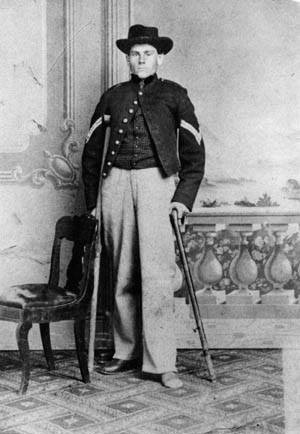
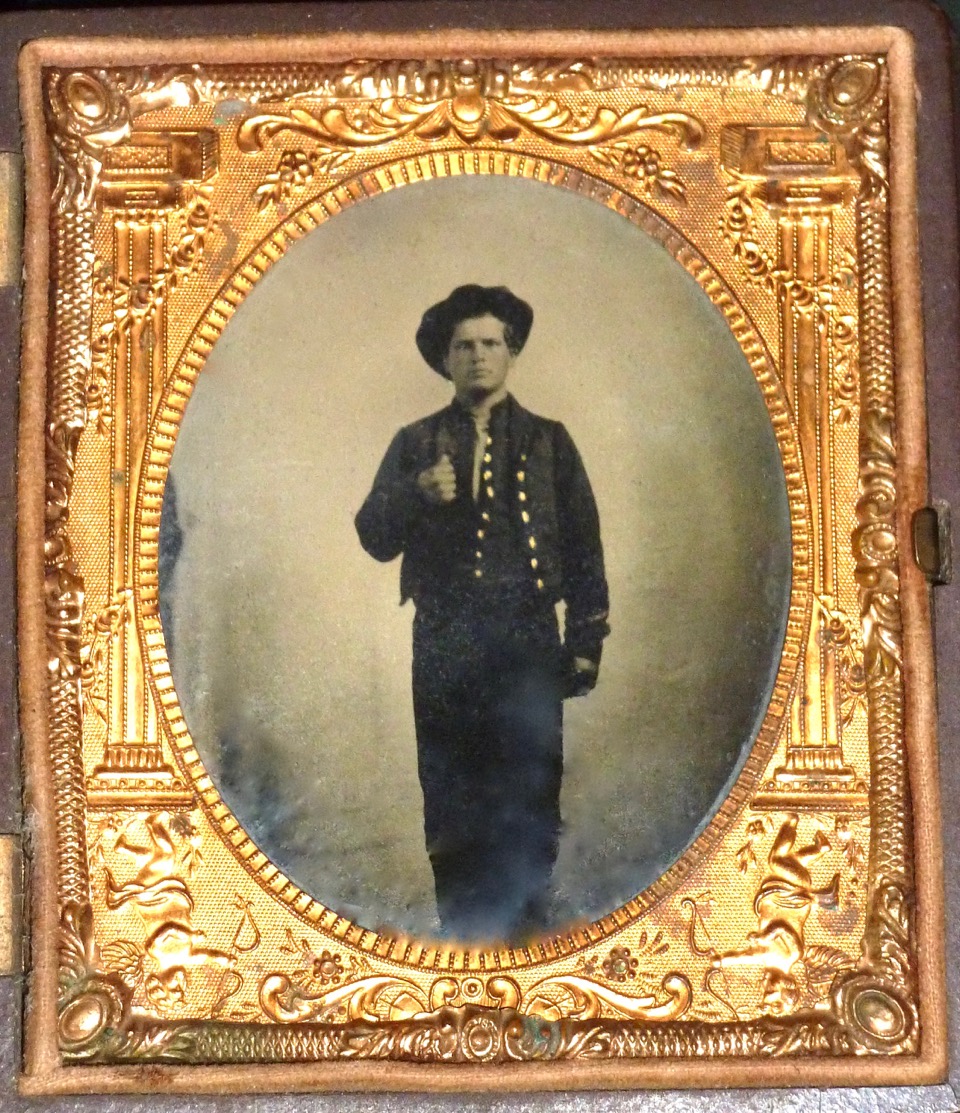
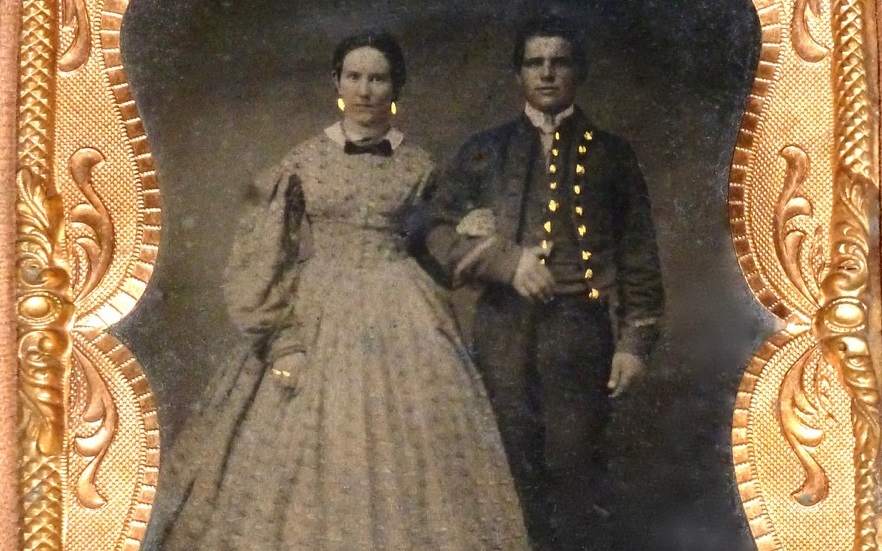
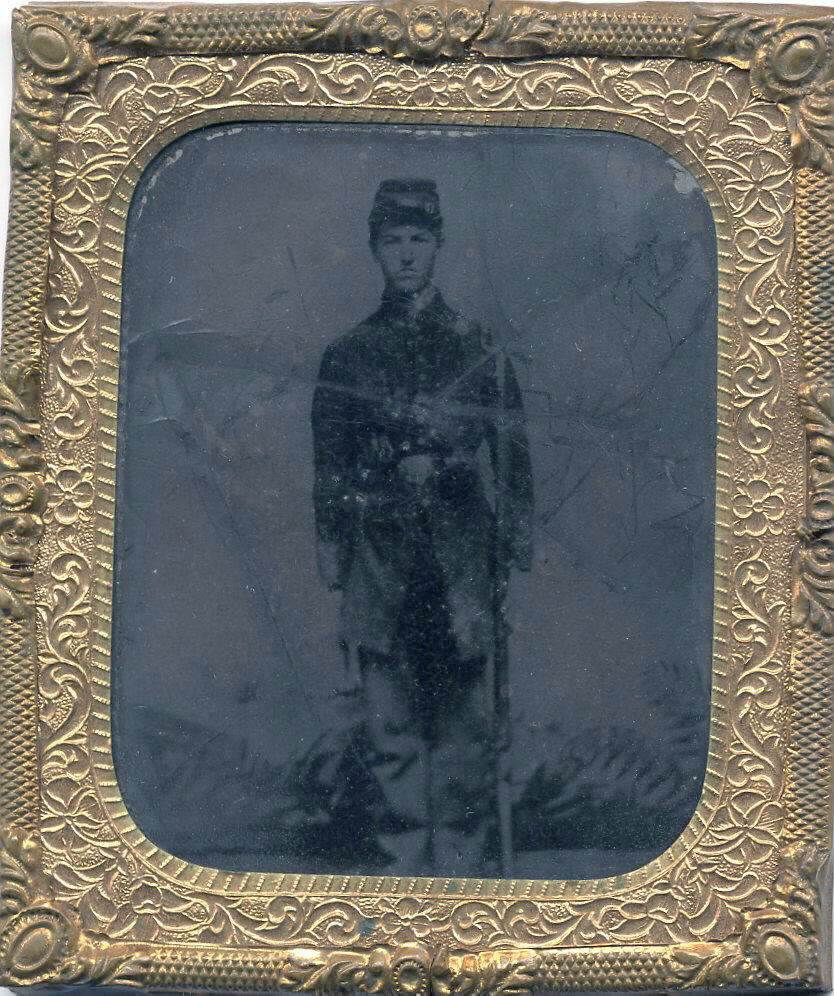
Letter from Peter James, Company C

Posted in Regimental History, Soldier Profile with tags , , , , , , on July 25, 2012 by 40thindiana

Peter James Grave, Freedom Cemetery

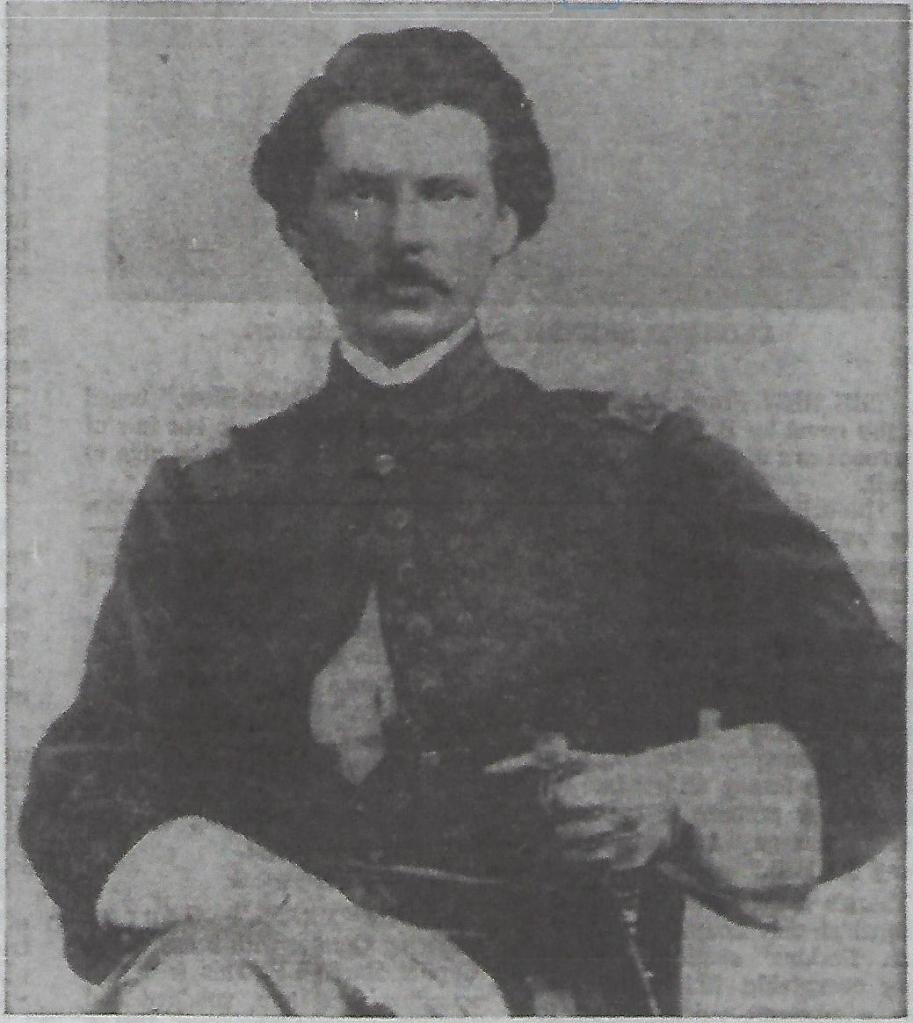
A really great letter written by Private Peter James of Company C. It is addressed to Thomas Glenn, a farmer living in the Freedom Community, near the town of Waveland, Montgomery County, Indiana. Before the outbreak of war, Peter lived near the Glenn family and had been working as a hired hand on Mr. Glenn’s farm. In the letter, Peter has apparently recieved news that Thomas Glenn’s daughter has recently died and tries to console him. Another interesting part of the letter; the view of a Western Theater Federal Soldier on Gen. Robert E. Lee. James pens his thoughts about the possibility of Lee’s complete surrender if Virginia is lost, he seems to have knowledge and respect for General Lee. His predictions would come true in a months time. I found it surprising that  a soldier who had spent the last four years fighting in the West would really care to stay informed on the war situation in Virginia.

At the time of this letter, Peter James was a Veteran Volunteer, he had been serving as a hospital steward for over a year.  Enjoy reading the thoughts and views of a 40th Indiana Private!

I would like to thank Sue Purschwitz for sharing this wonderful piece of history that has remained in her family for the last 150 years. The letter was written to her gg-grandfather Thomas Glenn, an early settler of Brown Twp., Montgomery County, IN.  Sue has other connections within the 40th Indiana Infantry, her gg-granduncles were Lt. James Hanna and Cpl. Robert Hanna of Company C. Both were present at Missionary Ridge, Robert was killed and James mortally wounded.  Another relative, Jonathan Rice Jr., also served in Company C. All lived around the Freedom area of Brown Twp., near present day Shades State Park.

Peter James was born in Indiana on Feb. 25, 1831. Peter worked as a farm hand for Mr. Thomas Glenn and is also listed as a cabinet maker in the 1860 Montgomery County Census. He was married Sept. 4, 1851 to Susan C. Conner. On Dec. 6, 1861 Peter enlisted as a private in Company C, 40th Indiana Reg’t. for three years. He would be with his company during the battles of Stones River and Missionary Ridge. On Feb. 1, 1864, Peter was assigned to duty under the 40th Indiana Reg’t. Field and Staff as a hospital steward. He would serve in this capacity until wars end, an eyewitness to the carnage of the Atlanta and Tennessee Campaigns. Most notably the assault on Kennesaw Mt., GA. and the battle of Franklin, TN. Peter mustered out of the 40th Indiana Veteran Reg’t. on December 12, 1865, at Texana, TX. In the 1870-1880 Montgomery County Census, Peter is listed as a farmer. The 1880 census shows that Peter and Susan have 8 children. Peter died on July 21, 1891, and is buried beside his wife in Freedom Cemetery, Brown Twp., Montgomery County. Indiana. Also resting in this cemetery are several 40th Indiana Reg’t. Veterans including four of Peter’s Company C  brothers who were killed on Missionary Ridge.

(Letterhead)

Thomas Glenn Esq.

Waveland

Montgomery County

Indiana

Peter James Letter

Head Quarters 40″ Ind. Vols.

Huntsville, Ala. March 14″ 1865

Mr. Thomas Glenn

Dear Brother

Yours of March 2″ was gladly recieved today.

I am well and hope this will find you and family likewise.  I have no war news to send you more than is published in papers. I had heard of the death of your Daughter and was very sorrow for she was an useful girl as well as affectionate and will be long remembered by those that knew her.

Not only you have been afflicted so but many thousands in like manner caused by the Struggle for Liberty which after four years toiling and struggling with our fiendish foe who have gave us battle after battle and have caused us to loose many of our best and bravest boys. All this trouble caused by a despotic clan who desire to live without work.

Now we have most got them conquered. Gov. Brown of Georgia has issued a proclamation to the people of Georgia and tells them that Jeff is only leading them to despotism and is in favor of dethroning him. In fact, all that I have seen, prisoners and deserters, have fell out with their President. Lee only promised to defend his native state and has done well. He was noted, before this war commenced for his charitable deeds, Christianity, etc., and in my opinion if he has to give up Virginia he will give up all, either voluntarily or by compulsion.

Rumors today indicate that we will soon be on the march. The 5″ Division had orders today to call in their safe guards and be ready to march tomorrow morning. Whether we will get orders or not is not fully known, but I see preparations that our officers are expecting them and the whole talk in camp is where are we going, but ah – that is a secret for the mail if captured would make known our intentions.

The weather is nice and vegetation is beginning to unfold its beauty according to natures law, not governed by neither Abe or Jeff, nor wars, nor peace,  but by Him that created us and every thing, and is able to bring us safe through this wilderness of war, privations and death, which is a frequent visitor. Will I and you witness the day of our death? We certainly will. You are yet spared and so am I and have witnessed the last of many good soldiers. I must close. Probably we may move tomorrow and I must prepare.

Yours very truly,

Peter James

40″ Indiana Vet Vols

2″Brig. 2″ Div. 4″A.C.

(note written sideways)

NIB I have also received a

Letter today from Susan

And probably will not have

Time to answer it

Newspaperman’s Eyewitness Account of Wagner’s Assault on Kennesaw Mt.

Posted in Atlanta Campaign, Wagners Brigade with tags , , , , , , , on July 18, 2012 by 40thindiana

This is a great account of the assault by Wagner’s brigade on Kennesaw Mt. from a relatively unknown Will County, IL. history book. The account before the newspaperman’s is from a veteran of the 100th Illinois Infantry. Link to the book:  http://archive.org/details/fifteenyearsagoo00wood

“Fifteen years ago; or, The patriotism of Will County, designed to preserve the names and memory of Will County soldiers, both officers and privatesboth living and dead: to tell something of what they did, and of what they suffered, in the great struggle to preserve our nationality”  By George H. Woodruff, Published for the author by J. Goodspeed, Joliet, Ill., 1876; pp 337 -341

Chapter VIII – History of the One Hundredth (Illinois); or, Will County Regiment 

“We have come now to the memorable “assault on Kenesaw” the 27th of June, when our division was moved to the right, and made a charge on the enemy’s works in front of the line occupied by Gen. Stanley’s division. Other charges were made in other parts of the line, all of which were unsuccessful. But that of our division was the severest. Our regiment was in the hottest of it. The division charged in solid mass, and found the enemy posted behind heavy earthworks with an abatis of brush in front, and three rows of sharpened stakes driven in front of their works, so that our men could not pass without stopping to pull them out; and to stop while making a charge is almost certain death. With grape and canister raking our boys both in flank and front, nothing but a depression in the ground kept them from being annihilated. Capt. Bowen and Major Hammond with the colors rallied about 150 men just under the hill, after the main part of the division had fallen back, and sent for entrenching tools, and would have made good their position within 60 yards of the enemy’s works. But instead of sending them tools, Gen. Wagner, commanding the brigade, thought it wiser to order the Major to bring the men in. When they got back behind the entrenchments they found the rest of the brigade forming their lines, and the belief current that the Major, Capt. Bowen, and the men, had been killed, and the colors lost, and their return was an agreeable surprise. Our color-bearer, Michael Murphy, carried the colors within ten steps of the rebel works and brought them safely away again.” In this charge which was equal in daring and hopelessness to the famous “charge of the 600;” and which now at least, in the cool distance, seems to have been uncalled for, and made without adequate promise of compensating good, and which Gen. Sherman labors somewhat in his report to justify, – the assaulting column suffered so severely as to draw tears even from the eyes of the enemy. For, as an eye witness relates, (one of the officers of the 100th) “The rebels sent our men word that the woods were on fire, and we had better come and take care of our killed and wounded. Lieut. Bartlett went with a detail of men, and while thus engaged conversed with a noble looking captain of the rebel army, who, as he looked upon the scene, said, with tears rolling down his cheeks, ‘This is awful, awful – but we had to do it.’” In this assault, the severest in which the 100th was ever engaged, the regiment lost three killed and 16 wounded, as in list below. Among the valuable lives lost that day was Gen. Harker, commanding one of the brigades in our division, a man and an officer greatly beloved, not only by his own command, but by all who knew him, and who only four days before had shed tears over the remains of our colonel. The following graphic description of the assault of the 4th corps was written immediately after by the correspondent of the “Cincinnati Commercial,” and is so truthful and interesting that I cannot forbear copying it entire.

“The 4th and 14th corps, the staunch center of the army, were called upon to give fresh proof of their valor to-day. These two corps, though originally in front of Kenesaw, had been pushed by the converging advance of our army to the southward of that frowning peak. The noble 4th corps, though by heavy odds the heaviest sufferer of the army, was the one of the three from which the assault was demanded. The boys were tired of heavy skirmishing; it had grown tedious, and lost its excitement, and I believe when they were apprized that their corps was to furnish two or three assaulting columns, they received the intelligence with a quick interest – nothing more. This thing of killing and being killed, had become an every day affair. Every platoon in the corps had bled freely since the campaign opened. They felt probably, as all veterans must feel, some apprehension, for the result of an assault upon a heavily fortified enemy, but none for themselves. Early in the gray of the morning, the preparations for the assault commenced, the first symptom being an unusually early breakfast. There was no evidence in the movement or bearing of the men, that they were so soon to essay “the deadly imminent breach;” though they must have been conscious that the task laid out for them was one which none but men hoping to meet death would covet. Between 7 and 8 o’clock the lines were formed. Newton’s division, consisting of Generals Wagner, Kimball, and Harker’s brigades, being selected as the storming parties. Kimball’s being on the left and somewhat retired, to act as a support of the other two. Wagner’s held the center, and Harker’s the right. Wood’s and Stanley’s divisions of the 4th corps furnished supports on the flanks of the assaulting brigades, but they were not seriously engaged, and their loss is trifling.

Assault of Wagner’s Brigade

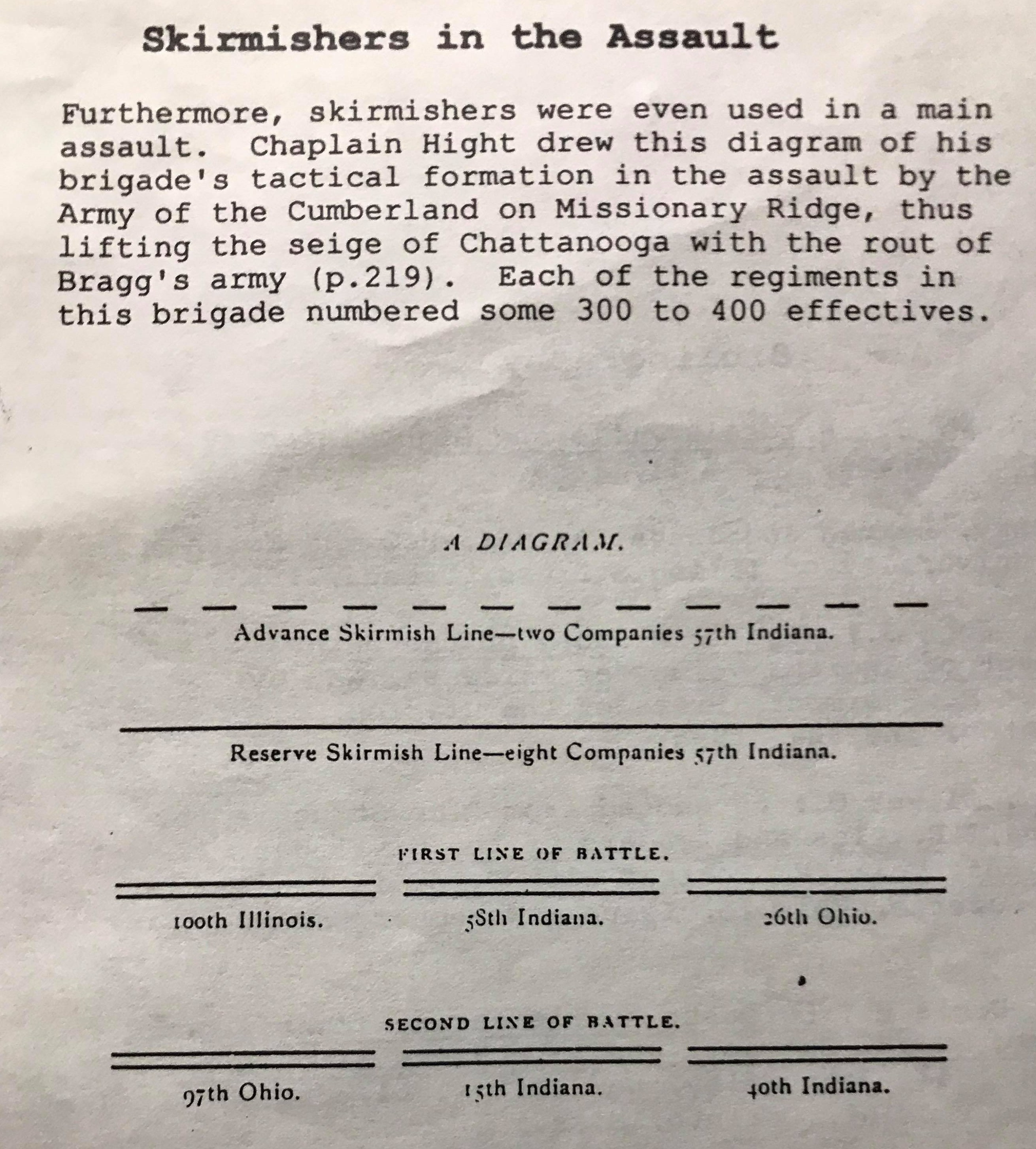
“This splendid brigade, composed of the 40th Ind., 57th Ind., 97th Ohio, 26th Ohio, 100th Ills., and 28th Kentucky, was thrown into columns of regimental divisions, thus giving the brigade a front of two companies, and a depth of 30 lines. The advance regiment was the 40th Ind., commanded by the fearless Blake. The column was formed in good season, and during the brief respite that ensued before the word “charge” was given, the men rested silently in their places, and no one could have guessed from their undisturbed faces, that all the latent gallantry of their natures could be aroused, and lashed into a fury of heroism during the next ten minutes. Here was a man carefully replacing his shoe and tucking away the strings; the proposition that “forlorn hopes” should be well and tightly shod plainly expressed in his movements. Letters were torn and crumpled and thrown furtively aside. Doubtless miniatures came from their hiding places for a moment that morning, but such things are done in the army in profound secrecy. The soldier hates a scene, and none more than the purely sentimental variety.

“At half-past eight the men spring to their feet at the word fraught with death to many. Thirty consecutive lines of blue leaped forward with impetuous strides making their way through the scattered trees and underbrush in splendid order. Before them on the crest of the ridge was the silent, and to the sight, the untenanted convex salient of the enemy’s works, for which they were aiming. They neared it rapidly, their enthusiasm rising with every step, and their hearts rising high as each indistinct object grew plain, as the slopes of the parapet became a mere furrow over which it seemed they must go. At the next moment the gates of hell opened in their very faces! A close, concentrating blast of musketry swept over the front line, leaving it indented, but unwavering! With the momentum of a mighty river, the brigade swept on until but two hundred paces – a mere stone’s throw it looked – divided the assailants from the assailed. The musketry of the enemy died to a mere pattering – muskets must be reloaded, and this fact sometimes looses battles. But palisades and abatis must be passed; and with the next rebel volley fired, as the fearless 40th Ind. reached a point within a hundred paces of their works, came a more awful thunder! Squarely in the teeth of the inspired brigade opened a battery of six guns, belching forth grape and canister, every shot ploughing through the devoted ranks, and the thick fume of their guns enveloping the interval of ground over which our brigade must pass. Every ball from those guns infiladed sixty men, the column of attack as I have already said, being thirty lines deep. The front lines shattered to pieces, slackened their furious onset, which brought those in the rear, jamming up in one confused mass of men – confused – but still bent on their fearfully grim and bloody task. It was intended when the head of the column reached a point within pistol shot of the enemy’s parapet, to deploy into a column of regiments. This was no longer feasible, for organization was lost, and the whole column was a tightly closed surging mass of men, ragged at the edges – but all moving one way – toward the enemy! The rebel battery fired a second volley, completing shattering Wagner’s column, as a column, the cannon blowing aside every animated thing in their front. Masses of men moved to the right and the left of the range of the battery – still bent upon one object. Many struggled up within twenty yards of the enemy’s works, some penetrated the lines of the palisades, and abatis at their base, and a devoted few planted the foot of a color-staff on the slope of a parapet! But the assault had failed – failed heroically in less time than I have taken to relate it. For nearly an hour portions of the brigade held points within fifty yards of the enemy’s line, but all such were thinned out by the deadly rifle men, who nearly secure himself, was at liberty indulge in the uncommon luxury of gloating over a foe, before firing with cool, deliberate and unerring aim. As the remnants of the brigade started back, long lines of rebels swarmed from their trenches, pursuing rapidly with infernal yells. They soon swarmed back, and faster than they emerged, when our reserves opened on them with a withering fire of small arms and artillery. The brigade fell back to the line vacated in the morning, leaving over two hundred killed and wounded. The proportion of officers lost was larger than the average, and here, as elsewhere during the assault, an unusual number were hit in the head. Wagner’s brigade left winter quarters last spring, nearly 2000 strong, but it was reduced to half that number,over fifty percent having been killed and wounded during the campaign. Gen. Wagner fought, where he always fights, at the head of his brigade, and his escape from hurt is most miraculous. Two or three hours after the assault, his men were bustling around their camps, making their coffee, having already exhausted conversation on the great topic which the morning had furnished. ‘D–n the assaults in column,’ I heard one remark as he punched the blaze under his coffee, ‘they make a man more afraid of being trampled to death by the rear lines, than he is of the enemy, they might do on a marble floor.’

“His comments would offend Jomini and Monticella, but the speaker as a member of one of the advanced regiments in the assaulting column had a clear right to speak his mind.”

Brig. Gen. Thomas J. Wood, Shiloh After Action Report

Posted in Shiloh, Wagners Brigade with tags , , , on April 6, 2012 by 40thindiana

HEADQUARTERS. SIXTH DIVISION, ARMY OF THE OHIO,
On the Battle-field, near Pittsburg, Tenn., April 10, 1862

Col. J. B. Fry,
Assistant Adjutant-General, Chief of Staff

SIR: I have the honor to submit the following report of the operations of my division in the battle of the 7th instant:
About midday on the 6th instant, while two brigades of the division— the Third Ohio Cavalry, and the three batteries of Cockerill, Cochran, and Schultz, with the baggage and supply trains— were on the march toward Savannah, and about 18 miles thence, an order was received directing me to leave baggage and supply trains in the rear and to press forward with the troops, provided with three days’ rations in their haversacks and 40 rounds of ammunition in the cartridge boxes. I was also ordered to bring forward the ammunition train. While arrangements were being made to carry the order into effect I received a second order, directing me to press forward as rapidly as possible with the troops, but to bring forward also all my train· An intimation also accompanied the order that the enemy had not made a substantial attack, but simply a forced reconnaissance.
I immediately recommenced the march, in compliance with the second order, but the movement was painfully slow and laborious, as the route was entirely blocked with the numerous trains of the divisions in front. It was impossible to advance more than a mile an hour. While thus engaged I received a third order at 5.30 o’clock p.m. reiterating the first order, with the additional direction not to bring on the ammunition train. I was also informed with this order that the attack seemed to be in earnest Dispositions were at once made to comply with this order but before these were fully completed night had fallen, and two brigades (less the Fifty-first Regiment Indiana; Volunteers, left as a guard to the train) and the batteries commenced a night march over a road almost inconceivably bad and obstructed by wagon trains, many of which were immovably stuck in the mud. With all these embarrassments to impede the movement and render it laborious and slow, about 12 o’clock the darkness became impenetrable and the rain began to fall in torrents. It was impossible to see a pace in advance, and it was absolutely necessary to halt until the storm had passed and the road had become sufficiently illuminated to permit the onward movement. The troops were eager to advance to the assistance of their hard-pressed brethren, and their chafing and impatience under the inability to advance may be more readily imagined than described.
So soon as the subsidence of the storm and the faint returning light permitted-the march was resumed and pressed vigorously. Savannah was reached early on the morning of the 7th, and so soon as possible the embarkation for the battle-field commenced. Wagner’s Brigade (the Twenty-first), consisting of the Fifteenth, Fortieth, and Fifty-seventh Indiana and Twenty-fourth Kentucky Volunteers, was first embarked. In order to hasten, by my personal supervision, the embarkation of the remainder of the troops I remained in Savannah till the Twentieth Brigade (Garfield’s) embarked, and ordered one of my aides-de-camp, Captain Lennard, to accompany the Twenty-first Brigade to the battlefield and report it to the commanding general. The brigade had fully debarked by 12 m., and for its operations from that hour to my own arrival, at I p.m., I refer to Colonel Wagner’s report, herewith submitted, with the simple remark that it did good service in driving the enemy from his last strong stand, and compelling him, by a vigorous pursuit, into a rapid retreat. The Twentieth Brigade, consisting of the Sixty-fourth and Sixty-fifth Ohio and Thirteenth Michigan Regiments, was embarked so soon as transports were ready, and finding it would be impossible to get transportation immediately for the artillery and cavalry of my division, I accompanied this brigade. It was debarked on arriving at Pittsburg with the least possible delay, and under an order received from Major-General Grant to conduct it to whatever part of the field on which the firing seemed to be hottest, I led it to the engagement.
By this time the valor of the troops hitherto engaged had been crowned with the deserved success of forcing the enemy from his last obstinate resistance, and it was left to the Twentieth Brigade simply to vigor in the pursuit. This was done at once, and though pressed with vigor, it was never near enough to reach the fugitives with small-arms, notwithstanding it was under the fire of the battery covering the retreat of the enemy. General Garfield’s report is herewith submitted, showing more in detail the operations of his brigade. It was unfortunate that transports could not be obtained to bring forward the artillery with the foot of my division. I cannot doubt the usefulness and efficiency of its action, after the artillery previously engaged had been materially exhausted in pressing the retreat of the enemy, and, perhaps fortunately, causing it to degenerate into an utter rout.
As early as practicable after the pursuit had been desisted from I reported the Twentieth Brigade to the commanding general (Buell), and was ordered to place it to the right of the Twenty-first Brigade, which he had already placed in position. The two brigades bivouacked the night of the 7th instant on the line of the retreat of the enemy, ready for the battle on the morrow should he have the temerity to renew the contest.
On the 8th I was ordered to make a reconnaissance with the two brigades and Captain Stone’s battery (in conjunction with two brigades and a cavalry force, under Brigadier-General Sherman), several miles in advance, on the enemy’s line of retreat. By this reconnaissance it was discovered that the enemy had retreated rapidly and in disorder, leaving many of his wounded and dead in his rear. The line of retreat was marked by abandoned and destroyed stores and munitions of war and arms. Various field hospitals filled with wounded were discovered on both sides of the road by which he had retreated. It was also determined satisfactorily by the reconnaissance that the main body of the enemy repassed Lick Creek, distant several miles from the battle-field, on Monday night, leaving only a cavalry force in rear to protect his rapid retreat. The Fifteenth Brigade (Brigadier-General Hascall’s) was detached, by an order of the general commanding, three days’ march from the Tennessee River, to make a detour by the way of Lawrence-burg, which prevented it, notwithstanding it made a rapid and laborious forced march, from arriving on the battle-field until 10 o’clock on Tuesday morning. Worn as it then was, it was anxious to participate in the forced reconnaissance. The troops under fire behaved with great coolness and were eager to engage the enemy. The cheerfulness and alacrity with which they bore the labor and fatigue of rapid march, compactly conducted, of 140 miles, from Nashville to Savannah, is an earnest of their zeal to be present in the great battle and victory, and I take great pleasure in commending their soldierly conduct, as well on the march as in the action, to the notice of the commanding general.
From the part borne by my division in the action, where all behaved well, it is difficult to discriminate individuals for special commendation; but I deem it only an act of justice to signalize the brigade commanders, Brigadier-General Garfield, commanding the Twentieth, and Colonel Wagner, commanding the Twenty-first Brigade for their good conduct and efficiency.
To the officers of my personal staff, Captain Schlater, assistant adjutant-general, and Captain Lennard, Thirty-sixth Indiana, and Captain Clark, Twenty-ninth Indiana, aides-de-camp, as also to the officers of my general staff, Lieutenant-Colonel Gass, Sixty-fourth Ohio; Surgeon Mussy, senior medical officer of the division; Lieutenant Gregg, Sixty-fifth Ohio, division commissary; Lieutenant Hunt, Sixty-fifth Ohio, division ordnance officer, and Lieutenant Martin, Twenty-first Ohio signal officer, my thanks are specially due for their promptness and general good conduct.
A field desk was captured on the field by my division, containing the order of General A. Sidney Johnston, commanding the Grand Army of the Mississippi, organizing his army for the late great battle. The order shows how grand and well organized was the attacking force, and bears evidence that the troops had been drawn from every available source. The desk also contained a copy of General Johnston’s address to his army. The address, made on the eve of the march to the encounter, shows that the commander-in-chief sought to inflame the zeal and courage of his troops by the most incendiary appeal, as well as proves how momentous was the conflict through which our troops have so fortunately and honorably passed.
A copy of the order and address is herewith submitted,(*) as also of my own order of congratulation to the division.
I am, sir, very respectfully, your obedient servant,
TH. J. WOOD,
Brigadier-General of Volunteers, Commanding.

Sad Duty, Death Notification Letter

Posted in Missionary Ridge with tags , , , , , , , on April 2, 2012 by 40thindiana

One of the saddest moments during a soldier’s life must have been notifying family members that a loved one had died. Going through the pension paperwork for Private Taylor McIntosh’s (Co. H) mother, Eliza McIntosh, I noticed a letter sent to her from Chattanooga on a 40th Indiana Infantry letterhead. The news was not good, Private Taylor McIntosh received a head wound during the assault up Missionary Ridge, November 25th, 1863. On December 19th, 1863 McIntosh would die of his wound in one of the hospitals established in Chattanooga, TN.

I am a little confused who wrote the letter, as it has two signatures. The first signature is William Oliver of Company C, he was from Waveland, Indiana, as was Taylor McIntosh. The two were probably close friends before the war and remained close while serving in the regiment. The rolls show William Oliver is later killed during the assault at Kenesaw Mt., June 27, 1864.

The second signature is from the 1st Lt. of Company H, John.C. Barnhart. John Barnhart was from Lafayette, Indiana, he mustered in as a corporal in Company H. John was promoted to 1st Lieutenant on December 14, 1862. The muster roll shows Barnhart resigning on November 22, 1863 before the Missionary Ridge attack. He is still in Chattanooga almost a month after resigning from the regiment, possibly waiting for the paperwork to go through.

Some of the content in the letter makes me believe that William Oliver is the author of the letter. At the end of the letter is the statement, ”as I Rite (wrote) to you a few days ago” and he wanted Eliza McIntosh to correspond back. If Barnhart wanted Eliza to write him back, he gave no forwarding address to Lafayette, and does not mention resigning.  Lt. Barnhart could have put Oliver’s words down on paper, or the two were close friends with McIntosh and composed the letter together on Barnhart’s 40th Indiana letterhead.

I have tried to keep everything the way it appears in the letter. Not many punctuations were used.

Head Quarters

Co. H, 40th Reg Indiana Vol. Inf.

Camp Chattanooga Tennessee Dec. 1863

Eliza McIntosh

Dear Madam

I take my pen in hand to inform

you of the death of your son he

Died yesterday morning the 19 of Dec.

he was wounded the 25 of November

and lived until yesterday morning

he was well cared for and had all

the care that a soldier could hav

him in the Army Hospitals

I was to see him Every Day after

I came up I was not (with) him at the

time of the Battle But was here

in a few days after

His things that you sent to him

is here and they will be sent to

Just as soon as the administrators

Can Do it or the money and will

Be Sent first as they think Proper

But you will get Every Thing that he

had or the amount of it in money

He died as a True Soldier and

One that Loved his country

he died fighting for the Rites of

man and God and no man

never Died in a more nobler

Cause. Well as I Rite you

a letter afew days a go

I will close by asking

you to write to me

Wm. Oliver  – (either H or &)

J. C. Barmheart

1st Lt. Co. H 40th Ind Vols

Gen. Wagner’s Shiloh After Action Report

Posted in Shiloh, Wagners Brigade with tags , , , , , on April 1, 2012 by 40thindiana

Image

With the 150th anniversary of the Battle of Shiloh upon us, I thought it proper to post the  report of the Twenty-first Brigade  submitted by General (Colonel at the time) George D. Wagner.

Source: Official Records

Report of Col. George D. Wagner

Fifteenth Indiana Infantry,

Commanding Twenty-first Brigade

Headquarters Twenty-First Brigade

In Camp, near Pittsburg,

Tenn. April 9, 1862

“Sir: I have the honor to inform you that this brigade arrived upon the battle field on Monday, April 7, 1862, in time to participate in the winding up of the great battle of that date. We disembarked, and were immediately ordered by General Grant to re-enforce the left wing of the army, which was then being hotly pressed by the enemy. The Fifty seventh Indiana Volunteers were first engaged, being thrown out and to the right of the brigade and on the left of General McCook, where they did good service, advancing upon the enemy under a heavy fire with the coolness of veterans until the enemy were driven from the field. I was ordered by General Buell to take up position on the Corinth road with the remaining portion of my brigade, to wit, the Fifteenth and Fortieth Indiana and Twenty fourth Kentucky. We advanced in line of battle, driving the enemy before us, until ordered to halt. While holding this position the enemy attacked us with infantry, cavalry, and artillery. The cavalry were soon dispersed by a few volleys from our advanced line with considerable loss to themselves. The infantry retired at the same time. We capture some 40 prisoners, among whom was a field officer, a chaplain, and a surgeon, and retook some of our own men who had been captured by the enemy. The enemy at the same time retreated beyond the range of our guns. I was then ordered by General Buell to retain that position, which I did until your arrival.

“I must be allowed to commend the coolness of both officers and men of my entire command.

“My casualties during the engagement were 4 wounded, all of which were in the Fifty seventh Indiana Regiment.”

I am sir, very respectfully, your obedient servant,

G.D. Wagner Col,

Colonel Commanding

John F. Ludington, Company K

Posted in Soldier Profile with tags , , , on March 27, 2012 by 40thindiana

Source: A Portrait and Biographical Record of Boone and Clinton Counties, Ind. Containing Biographical Sketches of Many Prominent and Representative Citizens, Together with Biographies and Portraits of all the Presidents of the United States, and Biographies of the Governors of Indiana. Published 1895 by A.W. Bowen & Co. Chicago, Ill.; . pp. 769 – 770

LUDINGTON, John F. , farmer of Jackson township, Clinton county, Ind., was born in Clinton county, Ohio, March 4, 1833. son of Stephen and Ann Ludington. Stephen Ludington was the son of Thomas, whose father came from Ireland. Thomas Ludington was born in New York, and died in the state of Ohio. Stephen Ludington was born in New York early accompanied his parents to Ohio, thence emigrated to Wisconsin, where he lived a short time, and in 1850 became a resident of Clinton county, Ind., where his death occurred in the month of October, 1857. His wife, whose maiden name was Anna Holdcraft, died in February, 1867. They were the parents of six children, namely: John F., Anna (deceased), Lucinda, wife of Joseph Halcy, Harvey, Delilah, wife John W. Witt, and Ellen (deceased). John F. Ludington was reared to a life of labor on his father’s farm and was unfortunate in not having the advantages of an education in his youth. He learned to read and write after reaching manhood, and early chose the machinist’s trade for his occupation. He first worked in the city of Chicago for one William Tuttle, in whose employ he remained about seven years, after which, for about fourteen years, he ran stationary engines at different places. He enlisted October 20, 1861, in Company K, Fortieth Indiana Infantry, Capt. A. E. Gordon, and went into camp at La Fayette, remaining there about a month. Later, his regiment went to Indianapolis, thence to Louisville, Ky., and Mr. Ludington saw his first active service in a forced march through Kentucky and a portion of Tennessee to Shiloh, in the bloody battle of which he took part. From Shiloh his command went to Holly Springs and Iuka, thence to Tuscumbia, Ala., and various other places in that state. Later, after devious marching, the regiment reached Munfordsville, Ky., and thence marched back to the city of Louisville. He took part in the battle of Perryville, after which the regiment followed in pursuit of Gen. Bragg. It would be difficult, in a sketch of this kind, to narrate, in detail, all the marches, skirmishes, and battles in which Mr. Ludington took part, but suffice it to say that throughout his varied experience, covering a period of nearly four years, he earned a reputation for duty bravely and uncomplainingly performed, of which he feels deservedly proud. He took part in the battle of Murfreesboro and the Chattanooga campaign, and met the enemy in the bloody fights of Missionary Ridge and Lookout Mountain. From Chattanooga he accompanied his command to Knoxville, thence to Georgia under General Sherman, and participated in the battles around Atlanta, among which were Buzzard’s Roost, Ringgold Station, Big Shanty, Kenesaw Mountain, Dallas and New Hope Church. At Strawberry Plains his regiment veteranized, after which he went home on a furlough. At the expiration of thirty days he rejoined his command at Round Top, Ga., thence went to Atlanta in time to take part in the battle of Peach Tree Creek. His regiment assisted in the pursuit of Hood to Franklin, Tenn., and after taking part in the battle at that place went to Nashville, where the army of Hood was almost annihilated. After various other movements in Tennessee, Arkansas, and Texas, Mr. Ludington was finally discharged at Indianapolis in 1865. He was wounded in the battle of Shiloh but refused to be taken to the hospital, and at Perryville he also received a severe wound in the arm. At Murfreesboro he received a gun-shot wound in the thigh, and on the twenty-fifth of September, 1863, was captured by the enemy and held until the twenty-eighth of December following. After leaving the army Mr. Ludington resumed his trade, but subsequently engaged in farming, which he still carries on. He has been twice married–the first time on the twenty eighth of August, 1857, to Susannah Daugherty a union blessed with the birth of six children four living–Mary J., wife of Frank Gunion; Minerva A., wife of Samuel West; James and Armetta M. The names of those decease are Anna E., born June 11, 1857, died February, 1875; Ida, born November, 1865, died December, 1865. The mother died August 28, 1887, and on the sixteenth day of March 1890, Mr. Ludington married his present wife Mrs. Sarah A. Heimick, nee Harbaugh. Mr. Ludington is a member of the Masonic fraternity, of the Odd Fellows’ order, and of the G. A. R. Politically he is a republican and in religion a Methodist.

Assault on Kennesaw, 57th Indiana Inf.

Posted in Atlanta Campaign, Wagners Brigade with tags , , , on March 26, 2012 by 40thindiana

Source: “Annals of the Fifty-Seventh Regiment Indiana Volunteers. Marches, Battles, and Incidents of Army Life.” Asbury Kerwood,1868; pp 262-264

“We remained behind the works until the morning of the 27th, when an attempt was made to pierce the line of the enemy by a simultaneous assault at several points. In a series of the most brilliant movements yet executed by the western army, Gen. Sherman had succeeded in dislodging Johnston’s army from every position, whether on mountain-top, on the hills, or in the valleys; so after six days’ operation in front of Kenesaw, he resolved to make a bold strike, and, if successful, drive the enemy in confusion across the Chattahoochie River. Newton’s division was the one assigned, by Gen. Howard, to make the assault in front of the 4th Corps, and the point designated was in front of Stanley’s division. At 7 o’clock A.M. our brigade formed , and marched over to the rear of the line where the attack was to be made. Gen. Wagner gave Col. Blanch his choice of position, either to join in the column or deploy his regiment as skirmishers, and move up in front of the column. Col. Blanch chose the latter, and at once deployed the regiment five paces apart, preparatory to an advance. The 40th Indiana occupied the front of the assaulting column. At 8 o’clock A.M. the signal was given to advance, when our regiment crossed the works, and drove the rebel skirmishers into their fortifications. The enemy reserved their artillery fire till the 40th advanced to within a short distance of their works, had raised the yell, and were moving forward on the double-quick, when they opened a withering fire of grape and canister, which carried death and destruction in it’s pathway. The assualting party was checked, and the men laid down. Other regiments were now thrown forward, and the assault was several times renewed, but all in vain. The order was given to fall back by companies from the rear, but in the confusion and excitement it was misunderstood, and a general retreat commenced. The slaughter among our troops at this moment was even greater than when they advanced, for the enemy now rose from behind their works, fearless of danger from the retreating force, and fired with greater presision than when the column advanced. In one hour the engagement was over, and our brigade again returned to their former position, behind the line of works. The 57th lost twenty-two in this bloody and almost fruitless engagement. The assault, although it secured no immediate victory, was evidence to the enemy that we could assault as well as flank, and thus prevent them from weakening their lines to extend their flanks.”

Note: The 40th Indiana lost 106 men killed and wounded during the June 27th assault.

Follow

Get every new post delivered to your Inbox.